 Accel Safety
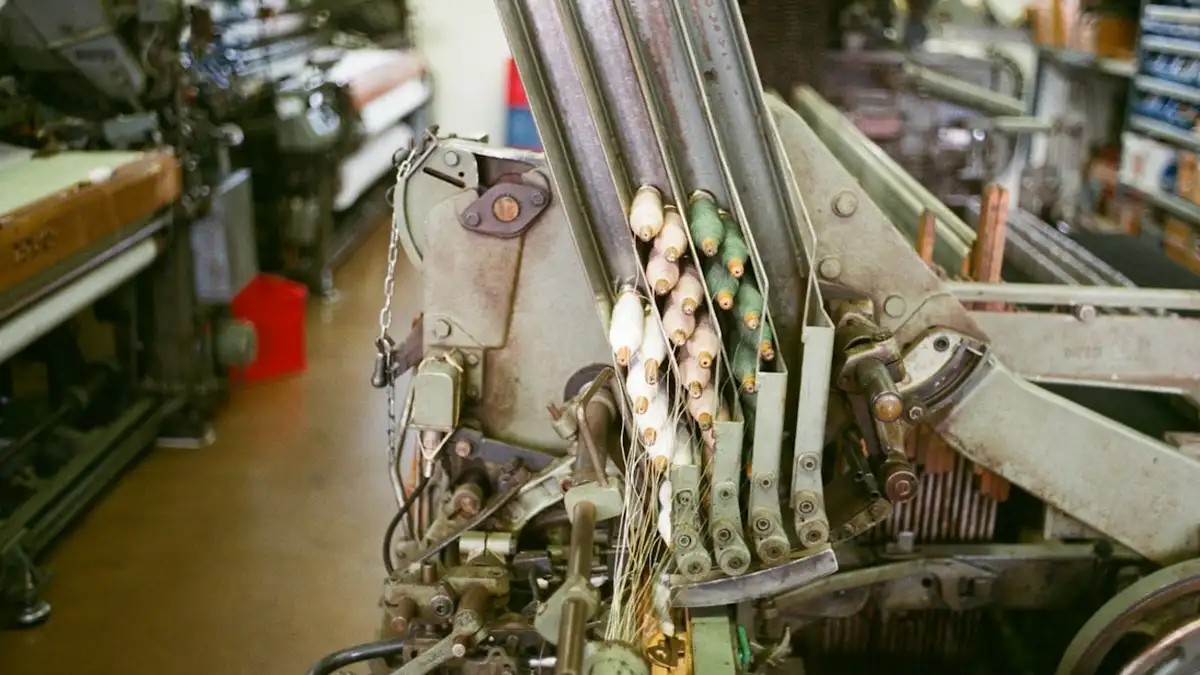
In a commission knitting factory, a stopped machine costs twice: it makes no kilos, and it often leaves a defect behind in the rolls it made before it stopped. Yet many floors still keep maintenance in a mechanic's notebook, if at all. When a buyer complains about lines in the fabric, nobody can say when the needles on that machine were last changed.
A per-machine maintenance log fixes that. This guide shows what to record, how to plan routine work, and how to connect maintenance to production and rejects, so you can see which machines need attention before they stop. It is general guidance: always follow the maintenance manual of your machine maker for intervals, oils and settings.
Why maintenance decides output and quality
The knitting elements wear every hour a machine runs. Groz-Beckert, the needle and sinker maker, notes in its large-diameter circular knitting guide that abrasive yarns cause premature wear, and that synthetic yarns with matting agents are especially hard on needle steel. It also explains that fibre fly mixes with oil and metal particles into dirt that narrows the needle track and increases friction, which can cause lines in the fabric, and that almost invisibly bent needle hooks can leave lines that only show after finishing.
Stoppages hurt efficiency as well as quality. In a widely read Apparel Resources article on circular knitting efficiency, Paul Collyer lists replacing needles, changing cones and mending broken threads as the unpredictable tasks that interrupt the machine cycle, and treats waiting for maintenance as a separate idle category worth measuring on its own. A 2019 study in the European Scientific Journal by Rassel and Hoque, written from Bangladesh, links yarn breakage and lost production to the working environment and operating conditions on the floor.
So the questions a factory owner needs answered are simple: which machines stop most, why, how long it takes to get them running, and whether the stoppages line up with rejects.
Breakdown, planned and condition-based
The Pacific Northwest National Laboratory's best-practice guidance for the U.S. Federal Energy Management Program describes three basic approaches:
- Reactive (breakdown) maintenance: run the machine until it fails, then repair it. The work is almost always unscheduled.
- Preventive (planned) maintenance: actions based on time or running hours that detect or prevent wear before it causes a failure.
- Predictive (condition-based) maintenance: measure the condition of the machine and act when it shows the first signs of wear.
The same guidance cites savings of 12 to 18 percent for preventive over reactive maintenance, and a further 8 to 12 percent for predictive over preventive. Those figures come from general equipment studies, not knitting floors, but the direction holds: a factory that plans its maintenance stops less often and at times it chooses. Even simple condition signals count, such as rising needle breakage on one machine or a new line appearing in the grey fabric.
What to record for every machine
Keep one log per machine, and one line per event. These fields make the log useful:
| Field | Why it matters |
|---|---|
| Machine number, date and shift | Links the event to the production report for the same machine and shift. |
| Type: planned or breakdown | Shows whether you are ahead of the machine or behind it. |
| Symptom or reason | Needle breakage, holes, lines, yarn breaks, oil stains, noise, feeder or take-down fault. |
| Work done and parts used | Needles or sinkers changed (with count), cleaning, oiling, adjustments. |
| Stop time and restart time | Gives downtime per event, and waiting time before the mechanic arrived. |
| Mechanic and operator | Who did the work and who reported it. |
| Running program | Shows which buyer's fabric was on the machine when the problem appeared. |
Write the reason in fixed categories, not free text. "Needle broken" and "N. break" in the same column cannot be counted.
A planned maintenance plan
Take the intervals from your machine maker's manual and turn them into a simple plan per machine. Typical planned tasks on circular knitting machines include:
- Removing fly and lint from the cylinder, dial, feeders and creel.
- Checking the oil supply to needles and sinkers, using the oil the maker recommends. Textile World notes that needle and sinker oils should not stain fabric, or should wash out easily, and should not leave deposits that clog the needle channels.
- Inspecting and replacing damaged needles and sinkers, and recording how many were replaced.
- Checking yarn feeders, stop motions and the take-down system.
- Deeper cleaning of the needle tracks and cams at longer intervals, or when lines start to appear.
Plan the longer jobs for program changes, when the machine stops anyway, and record each one in the log as planned work.
Linking maintenance to rejects
The log becomes far more useful when you read it next to quality data. If your grey fabric rejects are recorded by defect, machine and shift, you can check whether holes and needle lines on machine 14 started after the last needle change, or whether they disappear after cleaning. If your daily knitting production report records stoppage time and reason, the kilos lost to each machine are visible every morning.
This also protects you with buyers. When a buyer questions a batch, you can show which machine knitted it, when it was last serviced and what was done.
Five numbers to review every week
- Downtime hours per machine, split into planned and breakdown.
- Number of breakdowns per machine. The same machines tend to top the list week after week.
- Mean time between failures: running hours divided by the number of breakdowns.
- Mean time to repair: breakdown hours divided by the number of breakdowns, including waiting for the mechanic.
- Needles and sinkers replaced per machine, compared with the yarn and program it was running.
Look at the worst five machines first. A short list that gets fixed beats a long report nobody reads.
10-point checklist
- Every machine has its own log.
- Every event has a date, shift, machine and mechanic.
- Reasons are chosen from a fixed list.
- Planned and breakdown work are recorded separately.
- Stop and restart times are written down, not estimated later.
- Needle and sinker replacements are counted.
- The running program is recorded with every event.
- Planned tasks follow the machine maker's manual.
- Rejects by defect are reviewed next to the maintenance log.
- The five weekly numbers are reviewed by the owner or factory manager.
Frequently asked questions
What is a knitting machine maintenance log?
It is a record kept for each knitting machine of every maintenance event: date and shift, planned or breakdown, the reason, the work done, parts such as needles and sinkers replaced, stop and restart times, and who did the work.
How often should circular knitting machines be cleaned and oiled?
Follow the intervals in your machine maker's manual, adjusted for your yarns and speeds. Abrasive and fly-heavy yarns may need more frequent cleaning. Record each cleaning and oiling in the log so you can see whether faults return sooner on some machines.
Which fabric defects can poor maintenance cause?
Needle manufacturer Groz-Beckert links dirt in the needle track and bent needle hooks to lines in the fabric, and broken or damaged elements can cause holes and dropped stitches. Recording rejects by defect and machine shows which faults follow maintenance problems.
Should maintenance be in the same system as production?
It helps. When maintenance, production by machine and shift, and rejects by defect share the same machine numbers and programs, you can see the cost of each breakdown in kilos and quality, not just in hours.
How AccelKnit helps
AccelKnit, our knitting ERP, was shaped on a working knitting factory. Each machine has its own maintenance log, output is recorded in kg per machine and shift with the operator, and rejects are recorded by defect type and never billed, all under one Program ID that links store, production, quality, delivery and billing. It works in English and Bangla, and deleting an entry needs a comment and admin approval. See the modules on the AccelKnit page, or book a free demo with your own machine list.
Sources
- Groz-Beckert: Large diameter circular knitting (wear, dirt in the needle track, fabric lines) (PDF)
- Apparel Resources: Optimizing efficiency in circular knitting (Paul Collyer, 2009)
- European Scientific Journal: Re-evaluation on causes of circular knitting machine production efficiency (Rassel and Hoque, 2019)
- PNNL / FEMP: O&M best practices, maintenance approaches
- Textile World: Lubricating textile machines (April 2023)