 Accel Safety
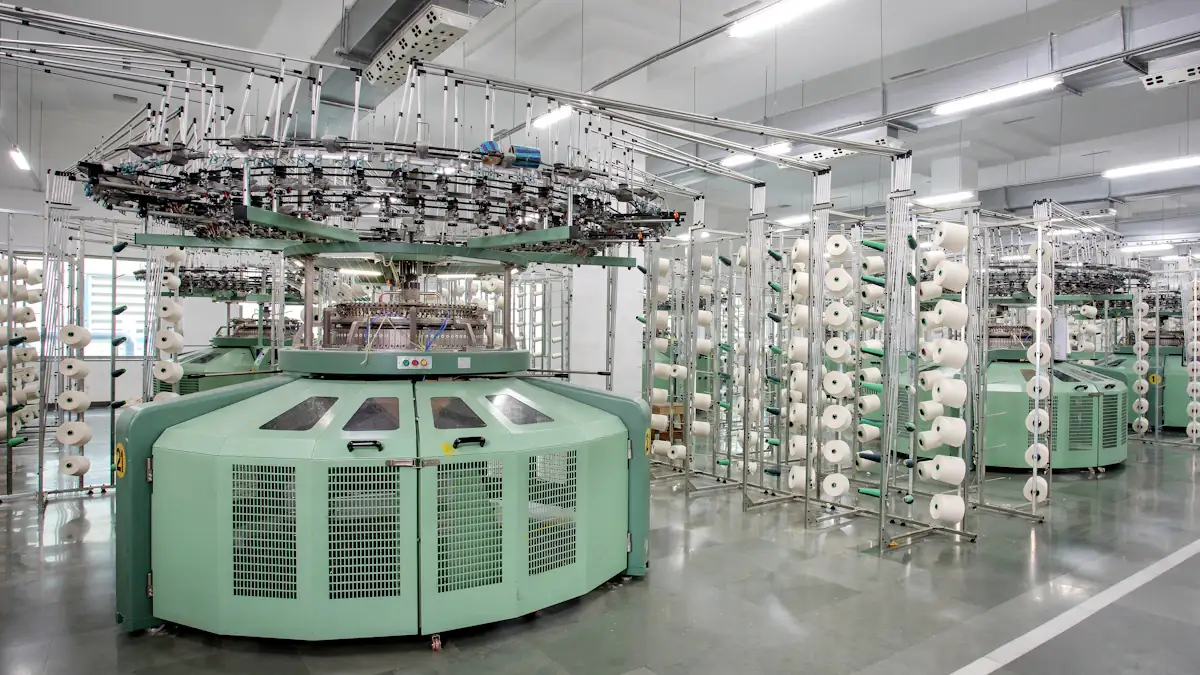
Why the daily production report matters
Bangladesh earned about US$38.70 billion from ready-made garment exports in FY2025-26, according to Export Promotion Bureau data reported by The Financial Express, and knitwear is the larger part of that trade: in FY2024-25, knitwear alone earned US$21.15 billion of the US$39.34 billion total. Behind every one of those garments is grey fabric knitted by the kilo, very often in commission knitting factories that knit a buyer's yarn and are paid on what they deliver.
In that business, the production report is not paperwork. It is the record that decides what you can bill, how much of the buyer's yarn should still be in your store, which machines are earning their keep and which shift is quietly losing output. A report that only says "total today: 3,200 kg" answers none of those questions. A report kept per machine and per shift answers all of them.
The fields to record for every machine and shift
Keep one line per machine per shift. Each line should be complete enough that someone in accounts or a buyer's merchandiser can follow it back to the yarn it came from.
| Field | Why it matters |
|---|---|
| Date and shift | Lets you compare shifts fairly and find where output drops. |
| Machine number | Output, rejects and stoppages differ by machine; the report must show which one. |
| Operator | Shows training needs and keeps responsibility clear. |
| Program (order) and buyer | Links the kilos to the order they belong to, and to the buyer's yarn balance. |
| Yarn lot issued | Mixed lots are a common source of shade and quality complaints; the lot must be on the record. |
| Fabric type and machine settings | Diameter, gauge, stitch length and count decide what the machine should produce. |
| Rolls and kg produced | The core output figure, weighed, not estimated. |
| Stoppage time and reason | Yarn shortage, needle breakage, maintenance, power or program change: each needs a different fix. |
| Rejects by defect type | Separates good fabric from fabric you cannot bill. |
Expected kg: a simple formula for each machine
Actual kilos mean little until you compare them with what the machine should produce at its settings. Knitting technology course material from NPTEL (India's National Programme on Technology Enhanced Learning) gives this formula for the hourly production of a multi-feeder circular knitting machine:
kg per hour = 0.6 × π × D × G × l × rpm × F × E × tex × 10-9
- D = machine diameter in inches, G = gauge (needles per inch), so π × D × G is the number of needles;
- l = loop (stitch) length in mm;
- rpm = machine speed, F = number of feeders;
- E = efficiency in percent;
- tex = yarn count in tex (grams per 1,000 metres). For cotton counted in Ne, convert to tex first.
Multiply the hourly figure by the running hours in your shift to get an expected kg for that machine and shift. Set this up once per fabric and machine, and the report can show expected and actual side by side.
A worked example
The NPTEL material works through a 28-inch, 24-gauge machine with 110 feeders running at 30 rpm and 95% efficiency, knitting 3.1 mm loops from 30s Ne cotton (about 19.7 tex). The result is about 24 kg per hour. Over an 8-hour shift, that is roughly 194 kg.
Now imagine the report for that machine shows 150 kg for the shift. That is about 23% below expected. The stoppage column should explain most of the gap: for example, 70 minutes waiting for yarn plus a needle change. If it does not, look at speed, at the shift's weighing practice, or at whether the machine was really on the program the report says. The numbers in this example are for illustration; use your own machine settings.
| Machine / shift | Expected kg | Actual kg | Gap | Main stoppage |
|---|---|---|---|---|
| M-07 / A | 194 | 188 | -3% | None |
| M-07 / B | 194 | 150 | -23% | Yarn shortage, needle change |
| M-12 / A | 162 | 158 | -2% | None |
Reading the report: four questions every morning
- Which machines are furthest below expected? Sort by the gap, not by total kilos. A big machine always looks good on totals.
- Is the gap explained? Every large gap should have a recorded stoppage reason. Unexplained gaps are where output, and sometimes yarn, goes missing.
- Which stoppage reasons repeat? Repeated yarn shortages point to the store or planning; repeated needle or cam problems point to maintenance.
- Does the program add up? For each open program, kilos knitted plus yarn still in store should be close to the yarn the buyer gave you, less agreed wastage. Our guide to yarn lot traceability explains that balance in detail.
Rejects belong in the same report
Recording rejects separately, days later, is how rejected fabric ends up on invoices and buyers lose trust. Record rejected kilos on the same line as the production, by machine and shift, with a defect type such as holes, drop stitches, oil stains, lycra problems or wrong GSM. Then two things become visible: which machines and shifts produce most rejects, and which defects cost most. The kilos you bill should be good kilos delivered, never the total off the machine. Our guide to grey fabric rejects covers defect types, the 4-point system and what to record.
Common mistakes in knitting production reports
- Totals only. A factory total hides the one machine that has been running at half speed all week.
- Estimated weights. Weigh every roll. Estimates make the yarn balance impossible to reconcile.
- No program on the line. Kilos without a program cannot be billed to the right buyer or checked against their yarn.
- "Other" as the stoppage reason. Keep a short fixed list of reasons so they can be counted.
- Editing yesterday's numbers quietly. Corrections should leave a trail: who changed what, and why.
Checklist for your daily production report
| # | Check | Done? |
|---|---|---|
| 1 | One line per machine per shift, with operator | ☐ |
| 2 | Program, buyer and yarn lot on every line | ☐ |
| 3 | Every roll weighed, kg and roll count recorded | ☐ |
| 4 | Expected kg set per machine and fabric | ☐ |
| 5 | Stoppage minutes with a reason from a fixed list | ☐ |
| 6 | Rejects by defect type on the same line, never billed | ☐ |
| 7 | Gaps over an agreed limit reviewed every morning | ☐ |
| 8 | Corrections leave a record of who, when and why | ☐ |
Frequently asked questions
How often should a knitting production report be made?
Every shift, one line per machine. A daily summary is built from the shift lines, so a problem on one machine is visible the next morning instead of at the end of the program.
What should one line of the report contain?
The date and shift, machine, operator, program and buyer, yarn lot, fabric type with GSM and dia, rolls and kilos knitted, rejected kilos by defect, and downtime with its reason. The fields table above lists them in detail.
How do you calculate expected production per machine?
Use the formula in the expected kg section: it combines machine speed, number of feeders, stitch length, yarn count and efficiency. Compare actual kilos with expected kilos, not only with yesterday's total.
Should kilos knitted by a subcontractor be in the report?
Keep them on the same buyer program, as a separate location, so the buyer balance stays complete. Our guide to subcontract knitting shows how to track yarn sent out, fabric received back and loss.
From notebook to system
Many factories start this on paper or in a spreadsheet, and that is far better than totals only. As machines, shifts and buyers grow, the hard part becomes keeping every line linked to its program and yarn lot. AccelKnit, our knitting ERP, was shaped on a working knitting factory: programs are opened and closed by the programmer, output is logged in kg per machine and shift with the operator, rejects are recorded per machine and shift by defect type and are never billed, each machine has its own maintenance log, and one Program ID links store, production, quality, delivery and billing. It works in English and Bangla, and deleting an entry needs a comment and admin approval. See the modules on the AccelKnit page, or book a free demo on one of your own programs. Comparing systems? Use our checklist for choosing a knitting ERP.