 Accel Safety
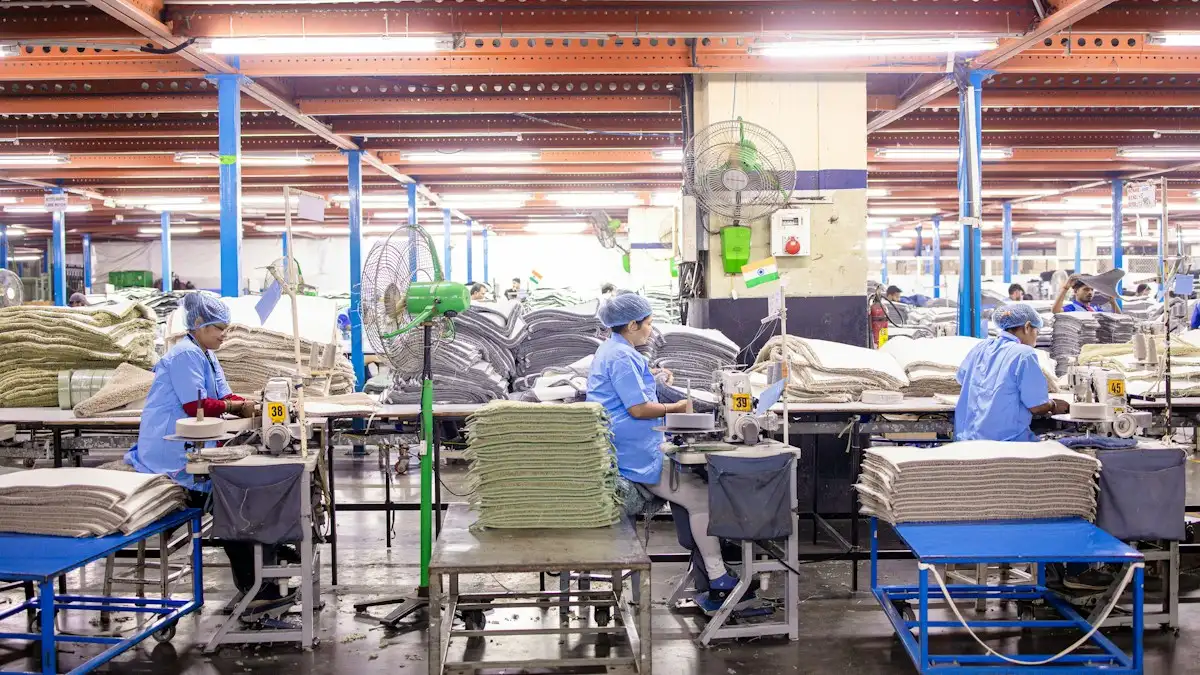
In most knitting factories, payroll is the job that eats the first week of every month. Machines run day and night on two or three shifts, operators move between machines, overtime changes with every rush order, and advances are given in cash on the floor. At month end, someone in accounts rebuilds all of it from attendance registers, supervisors' notes and a spreadsheet, and the salary sheet is ready only just in time.
This guide explains what a knitting factory in Bangladesh has to get right in payroll, which rules apply, and how to build a monthly process that produces a correct salary sheet without the last-minute rush. It is general information, not legal advice: labour law and wage gazettes change, so check the current text and your own wage board before you change your policies.
Why payroll is hard in a knitting factory
- Shifts around the clock. Circular knitting machines often run continuously, so attendance has to be recorded per shift, including night shifts that cross midnight.
- Overtime that changes daily. Rush orders and machine breakdowns change the hours worked from one day to the next.
- Operators linked to machines. Output is measured in kg per machine and shift. If you pay any production allowance, it depends on that data being right.
- Advances and loans. Small advances given during the month must be recovered correctly and within the law.
- Different groups. Operators, helpers, mechanics, store and office staff often have different grades, shifts and overtime rules.
What the law sets (Bangladesh)
The Bangladesh Labour Act, 2006 sets the main rules for workers. In summary:
- Daily hours (section 100): an adult worker ordinarily works no more than 8 hours a day, and may work up to 10 hours a day subject to the overtime rules in section 108.
- Weekly hours (section 102): ordinarily no more than 48 hours a week. With overtime, total hours must not exceed 60 in a week, and on average 56 hours a week over a year.
- Rest intervals (section 101): for example, a worker may not work more than 6 hours in a day without a one-hour interval for rest or meals.
- Weekly holiday (section 103): one day a week in a factory, without deduction from wages.
- Overtime pay (section 108): hours beyond the legal limits are paid at twice the ordinary rate of basic wage and dearness allowance and ad-hoc or interim wage, if any. For workers paid by piece rate, the employer may fix equivalent time rates in consultation with workers' representatives.
- Wage period and payment: the wage period cannot be longer than one month, and wages must be paid before the end of the seventh day after the wage period ends. A worker whose employment ends must be paid within 30 days.
- Deductions (section 125): only the deductions the Act allows, such as income tax, union subscriptions and recovery of advances, loans or overpayments. Deductions for absence cannot exceed the wage for the period of absence.
- Festival bonus: the Bangladesh Labour Rules, 2015 (rule 111(5)) require two festival bonuses a year for workers with at least one year of service, each not more than the basic wage.
The law has been amended recently. A June 2026 legal review of the 2025–2026 reforms reports that maternity benefit rose from 112 to 120 days, festival holidays from eleven to thirteen days, and that the Minimum Wage Board must review wages every three years. Update your leave and holiday settings to match the current text.
Minimum wage and increments
Minimum wages in Bangladesh are set by sector through government gazettes. First check which wage gazette covers your factory: a knit composite unit that also sews garments falls under the garment sector, while a stand-alone fabric knitting unit should confirm its own position with its association or adviser.
As an example of how a gazette is structured, the November 2023 garment sector gazette set an entry-level (grade 5) minimum of Tk 12,500 a month, effective 1 December 2023:
| Component | Grade 5 (Tk) | Grade 1 (Tk) |
|---|---|---|
| Basic | 6,700 | 8,200 |
| House rent | 3,350 | 4,100 |
| Medical | 750 | 750 |
| Conveyance | 450 | 450 |
| Food | 1,250 | 1,250 |
| Total | 12,500 | 14,750 |
The structure matters for payroll because overtime is calculated on the basic wage, not the total. Annual increments are also set by gazette: the 2023 structure included a 5% annual increment, and a January 2025 gazette added 4% to make 9%. Whether the 9% continues after 2025 has been disputed between owners and unions, so check the latest notification before you run your increment month.
From attendance to salary sheet
A reliable monthly payroll follows the same six steps every time:
- Daily attendance by shift. In and out times for every worker, every shift, entered the same day. Night shifts are recorded against the date the shift started.
- Overtime approval. The supervisor confirms overtime hours each day. Check that no one goes beyond 10 hours a day or 60 hours a week.
- Leave and holidays. Approved leave, weekly holidays and festival holidays are entered as they happen, not reconstructed at month end.
- Advances and other deductions. Every advance is recorded with the date, amount and agreed recovery.
- Salary sheet. Gross pay, overtime, allowances and deductions are calculated for each worker, in the format your factory and buyers' auditors expect.
- Review and pay. The owner or factory manager reviews exceptions, approves, and wages are paid within seven days of the end of the month.
If production and payroll use the same worker and machine records, the hours in payroll can be checked against the shifts in your knitting production report. A worker paid for a night shift should appear on a machine on that shift.
Overtime: a worked example
Take a worker on the grade 5 basic wage of Tk 6,700 from the table above. Many factories derive an hourly basic rate from 48 hours a week over 52 weeks, divided by 12 months, which gives 208 hours a month. Agree your own method with your adviser and apply it consistently.
| Step | Calculation | Result |
|---|---|---|
| Hourly basic rate | 6,700 ÷ 208 | Tk 32.21 |
| Overtime rate (twice the basic rate) | 32.21 × 2 | Tk 64.42 per hour |
| Overtime for 20 hours in the month | 64.42 × 20 | Tk 1,288.40 |
The common mistakes are calculating overtime on the gross wage, rounding hours in the factory's favour, and paying overtime in cash outside the salary sheet. Buyer auditors compare attendance, overtime and pay records, so the three must match.
Advances and deductions
Advances are normal in knitting factories, but they cause most payroll disputes. Record each one when it is given, with the worker's agreement on how it will be recovered. Recover only what was agreed, show it on the salary sheet as a separate line, and keep the balance for each worker visible. Deductions for absence must not exceed the wage for the days absent.
Salary sheet columns
Whatever format you use, a clear salary sheet usually includes:
| Group | Columns |
|---|---|
| Worker | ID, name, section (knitting, store, quality, maintenance), grade, joining date |
| Days | Days present, weekly holidays, festival holidays, leave by type, absent days |
| Earnings | Basic, house rent, medical, conveyance, food, overtime hours and amount, other allowances |
| Deductions | Absence, advance recovery, tax, other lawful deductions |
| Totals | Gross, total deductions, net pay, signature or payment reference |
12-point payroll checklist
- Your factory's wage gazette and grade structure are on file and up to date.
- Every worker has a grade, a basic wage and a joining date in the system.
- Attendance is entered by shift on the same day.
- Overtime is approved daily by the supervisor.
- No worker exceeds 10 hours a day or 60 hours a week.
- Overtime is calculated at twice the basic rate, by a fixed method.
- Leave, weekly holidays and festival holidays follow the current law.
- Every advance is recorded with an agreed recovery.
- Only lawful deductions appear on the salary sheet.
- Festival bonuses are planned for workers with one year of service.
- Wages are paid within seven days of the end of the month.
- Payroll hours are checked against production shifts before approval.
Frequently asked questions
How is overtime calculated in Bangladesh?
Under section 108 of the Bangladesh Labour Act, 2006, overtime is paid at twice the ordinary rate of basic wage and dearness allowance and ad-hoc or interim wage, if any. It is calculated on the basic wage, not the gross wage.
What is the maximum working time with overtime?
Section 102 allows an adult worker to work more than 48 hours a week with overtime, but total hours must not exceed 60 in a week and 56 a week on average over a year. Daily hours may go up to 10.
When must wages be paid?
The wage period cannot be longer than one month, and wages must be paid before the end of the seventh day after the wage period ends.
Who gets a festival bonus?
The Bangladesh Labour Rules, 2015 require two festival bonuses a year for workers with at least one year of service, each not more than the basic wage.
How AccelKnit helps
AccelKnit, our knitting ERP, includes HR and payroll with the salary sheet in your own format, next to production recorded in kg per machine and shift with the operator. Because both use the same worker and machine records, payroll hours can be checked against the shifts that were actually worked. It works in English and Bangla, and deleting an entry needs a comment and admin approval, so the payroll history stays clean for buyer audits. For attendance and shifts, leave requests and balances across a larger workforce, see AccelHR. See the modules on the AccelKnit page, or book a free demo with your own salary sheet.
Sources
- Bangladesh Labour Act, 2006, Chapter IX: sections 100–108 (text via Lawyers & Jurists)
- ILO NATLEX: Bangladesh Labour Act, 2006
- The Daily Star: The entitlements of the workers relating to wages (April 2020)
- The Financial Express: Festival bonus amid Covid-19 (Labour Rules 2015, rule 111(5)) (May 2020)
- Asia News Network: Bangladesh publishes gazette on new garment wages (November 2023)
- The Business Standard: Govt issues gazette on 9% yearly wage increment for RMG workers (January 2025)
- The Financial Express: Row brews over continuation of RMG workers' wage hike (October 2025)
- Legal 500: Bangladesh's 2025–2026 labour law reforms (June 2026)