 Accel Safety
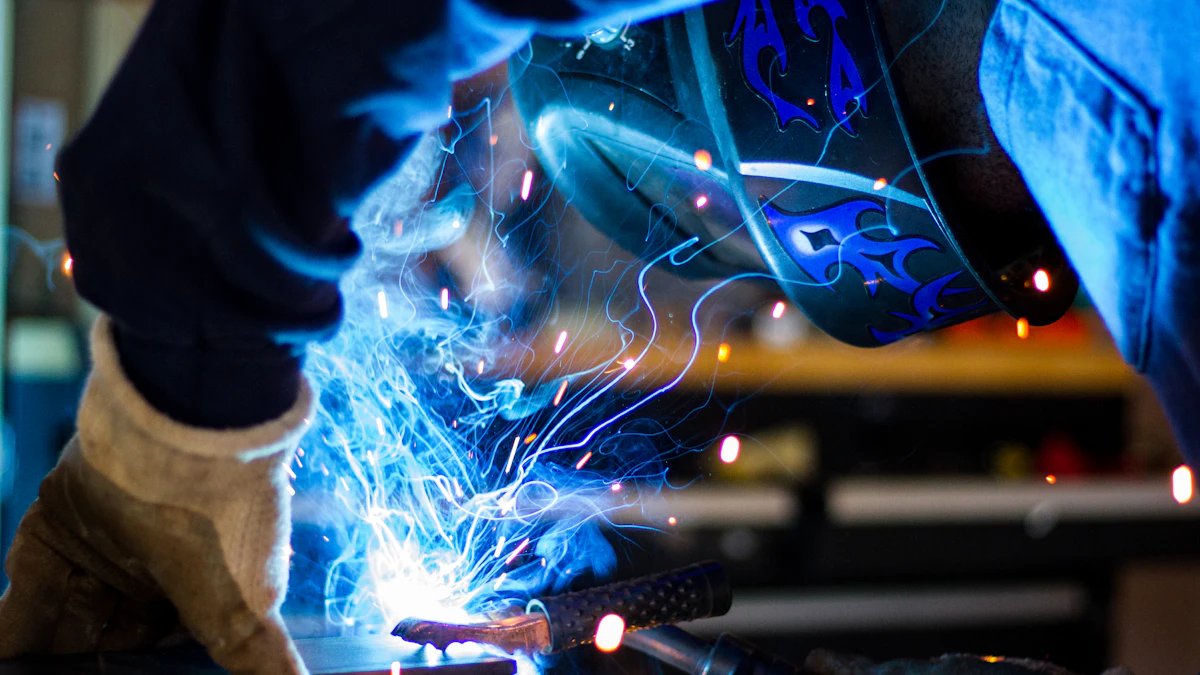
Why injury rates hide fatal risk
The International Labour Organization estimates that around 2.93 million workers died from work-related factors in 2019, including about 330,000 deaths from occupational accidents.
Most group safety dashboards are built on lagging rates such as recordable or lost-time injuries per hours worked. Those rates matter, but they are dominated by frequent, lower-severity cases: cuts, sprains, minor burns. A site can improve its recordable rate year after year while its exposure to falls from height, suspended loads or uncontrolled electrical energy stays the same. The events that kill or disable people can come from different hazards than the everyday injuries that drive the rate.
That is why it pays to add a second lens: for every event, not only what was the outcome? but what could the outcome realistically have been? Done consistently across countries, this turns near misses and minor injuries into an early warning system for the events that change lives. Our guide to leading and lagging safety KPIs covers the wider KPI set; this guide focuses on SIF.
The vocabulary: aSIF, pSIF and SIF risk
Two frameworks are widely discussed. ASTM E2920-26, the Standard Guide for Recording Priority Occupational Injuries and Illnesses and Serious Injury or Fatality (SIF)-Related Serious Injuries/Illnesses and Fatalities, was last updated in January 2026 and aims for a measurement system that is precise, accurate and resistant to manipulation. The Safety Classification and Learning (SCL) model from the Edison Electric Institute (EEI), revised in September 2024, was built for the electric power sector but its logic is used more widely.
| Term | Source | Meaning in plain words |
|---|---|---|
| aSIF (Level One) | ASTM E2920-26 | A work-connected case with life-ending, life-threatening or life-altering consequences. Benchmarkable. |
| Priority injury/illness (Level Two) | ASTM E2920-26 | Not an aSIF, but with significant consequences and a clear workplace connection. Benchmarkable. |
| Levels Three and Four | ASTM E2920-26 | Cases usually recorded to meet local legal requirements (Three), and less severe cases such as first aid and near misses (Four). Not intended for benchmarking. |
| pSIF | ASTM E2920-26 | No aSIF occurred, but the event was likely to have resulted in life-ending, life-threatening or life-altering consequences. Can apply to Levels Two to Four. Counts are not meant to be benchmarked. |
| SIFRisk | ASTM E2920-26 | No incident yet: conditions or constraints created by systems and processes that could lead to an aSIF if left unaddressed. |
| HSIF / PSIF / Capacity | EEI SCL model | A high-energy incident with a serious injury (HSIF); the same without a serious injury and with no direct control present (PSIF); a high-energy incident where a direct control was present and worked (Capacity). |
| High-consequence work-related injury | GRI 403 | A fatality, or an injury from which the worker cannot, does not, or is not expected to recover fully within six months. |
A group does not have to adopt every term. It does need one written dictionary, as described in our playbook for standardizing HSE reporting across countries, so that a pSIF in one country means the same as a pSIF in another.
Two ways to judge potential severity
The hardest part of SIF reporting is the word potential. Without clear rules, the same dropped object is rated as minor at one site and as a near fatality at the next. The two frameworks take different approaches.
Hazard typology (ASTM E2920-26). The guide uses a hazard typology and scenario-based appendix to identify pSIF cases. Commentators describe it as thorough but more open to interpretation, so groups using it should train and calibrate the people who classify.
Energy and direct controls (EEI SCL). The SCL model asks four yes/no questions for each high-energy source: was high energy present, did a high-energy incident occur, was a serious injury sustained, and was a direct control present? It defines high energy as physical energy above 500 ft-lbs and lists conditions presumed to be high energy, for example:
- suspended loads over 500 lbs lifted more than 1 foot;
- work at an elevation of 4 feet or more;
- mobile equipment or traffic with workers on foot;
- heavy rotating equipment beyond powered hand tools;
- electricity at or above 50 volts, and arc flash;
- fire with a sustained fuel source, explosions, and release of steam.
A direct control in the SCL model is a barrier targeted at the specific high-energy source that works even if someone makes an unrelated mistake: lockout/tagout, machine guarding, hard physical barriers, fall protection. Training, warning signs, rules, experience and standard PPE such as hard hats, gloves and boots are explicitly not direct controls.
Because its questions are factual rather than imaginative, the energy approach can be easier to apply consistently across countries. Whichever you choose, write it down, give examples from your own operations, and use the same rule everywhere.
A group classification workflow
- Report everything quickly. Workers and supervisors report incidents, near misses and hazards from a phone, with photos, at the moment they happen. Easy reporting is what feeds the system.
- First classification at site. The site HSE lead answers the classification questions within an agreed time and records actual and potential severity separately.
- Second review for anything serious. Every case marked aSIF, pSIF or close to the line is reviewed by a small, trained panel at country or group level. This calibration step stops one site from rating everything low and another from rating everything high.
- Investigate for the missing control. For pSIF cases, the key question is not who made the mistake, but which direct control was missing, failed or bypassed. Root cause and lessons learned should be written so another site can use them.
- Act on controls, not only on behaviour. Corrective actions should install, restore or verify a control on the energy source. Track each action with an owner and deadline until it is closed and checked for effectiveness.
- Share lessons across the group. A pSIF at one plant is a free warning for every plant with the same equipment or task.
What to put on the group dashboard
| Metric | Why it helps | Watch out for |
|---|---|---|
| aSIF and priority cases (Levels One and Two), count and rate per hours worked, employees and contractors | The benchmarkable outcome measure; one vendor summary of the guide expresses it per 1,000,000 hours. | Small numbers swing; show rolling 12 months. |
| pSIF count by hazard type and site | Shows where serious potential concentrates. | Not for league tables: ASTM says pSIF counts are not meant to be benchmarked. |
| % of events with potential severity assessed | Shows whether classification actually happens. | Aim for completeness, not a target number of pSIFs. |
| % of pSIF investigations completed on time | Measures follow-through. | Quality of investigation matters more than speed. |
| % of pSIF actions that add or restore a direct control | Tests whether actions address energy, not only behaviour. | Needs a clear definition of a direct control. |
| Open SIFRisk conditions and their age | Shows known serious exposures not yet fixed. | Every item needs an owner. |
How deep each investigation goes, and how its actions are checked, is covered in our guide to incident investigation and CAPA across many sites.
Expect pSIF numbers to rise when you start. That usually means events that always happened are now being seen, not that sites became less safe. Say this clearly to boards and site managers before the first report, or the programme will be judged on the wrong signal.
Legal reporting and ESG disclosure
SIF classification sits on top of your legal duties; it does not replace them. Reporting rules differ by country. In the United States, for example, OSHA requires employers to report a work-related fatality within eight hours, and an in-patient hospitalization, amputation or loss of an eye within 24 hours (29 CFR 1904.39). Keep each country's legal clock in the workflow alongside the group classification. This is general information, not legal advice.
For sustainability reports, GRI 403-9 asks for the number and rate of fatalities, high-consequence work-related injuries and recordable injuries, for employees and for workers who are not employees but whose work or workplace the organization controls, on a 200,000 or 1,000,000 hour basis. It also asks which work-related hazards pose a risk of high-consequence injury, how they were determined, and what actions are taken using the hierarchy of controls. A working SIF process gives you most of that disclosure as a by-product.
Common pitfalls
- Classifying by outcome. A worker who was not hurt by a falling load still had a pSIF. Luck is not a control.
- Counting PPE and training as controls. Under the SCL model they are not direct controls. Counting them hides real exposure.
- No calibration. Without a second review, each site develops its own threshold and the group numbers stop meaning anything.
- Using pSIF as a target. If managers are rewarded for fewer pSIFs, reporting falls. Reward good classification and closed controls instead.
- Leaving out contractors. High-energy work is often done by contractors. Include them in reporting, investigation and rates (see our guide to contractor safety management across many sites).
- Editing the classification quietly. A pSIF downgraded to minor should leave a record of who changed it and why.
Checklist for a group SIF reporting programme
| # | Check | Done? |
|---|---|---|
| 1 | One written definition of aSIF, priority injury, pSIF and SIF risk, with local examples | ☐ |
| 2 | One method to judge potential (hazard typology or energy and direct controls), used everywhere | ☐ |
| 3 | Actual and potential severity recorded separately on every event | ☐ |
| 4 | Second review by a trained panel for serious and borderline cases | ☐ |
| 5 | Investigations ask which direct control was missing or failed | ☐ |
| 6 | Corrective actions tracked to closure and checked for effectiveness | ☐ |
| 7 | Contractors included in reporting and rates | ☐ |
| 8 | Country legal reporting clocks kept alongside the group process | ☐ |
| 9 | Lessons from pSIF cases shared with every site that has the same hazard | ☐ |
| 10 | Board briefed that pSIF numbers will rise as visibility improves | ☐ |
Making it work across every site
SIF reporting fails when it lives in spreadsheets that each site fills in differently. AccelSafety, our enterprise HSE software, puts every site on one hierarchy from group to region, country, cluster and site. Incidents, hazards and near misses are reported from a phone with photos; investigations record root cause and lessons learned; actions and CAPA are tracked to closure; and approvals and reviews stay with the roles you choose. Group dashboards drill back to the source records with their history, so a pSIF figure in a board report can always be traced to the events behind it. See also our incident reporting software, or book a demo with a structure like yours.
Sources
- ASTM International: E2920-26 Standard Guide for Recording Priority Occupational Injuries and Illnesses and SIF-Related Serious Injuries/Illnesses and Fatalities (updated January 2026)
- Edison Electric Institute: Safety Classification and Learning (SCL) Model, second revision, September 2024 (PDF)
- Intelex: ASTM E2920-26 and the EEI Safety Classification and Learning Model (31 July 2026)
- Novara: ASTM E2920-26, a new standard for recording serious injuries and fatalities (2026)
- GRI 403: Occupational Health and Safety 2018 (PDF)
- OSHA: 29 CFR 1904.39, Reporting fatalities, hospitalizations, amputations, and losses of an eye
- ILOSTAT: The right to occupational safety and health: still unrealized (28 April 2025)