 Accel Safety
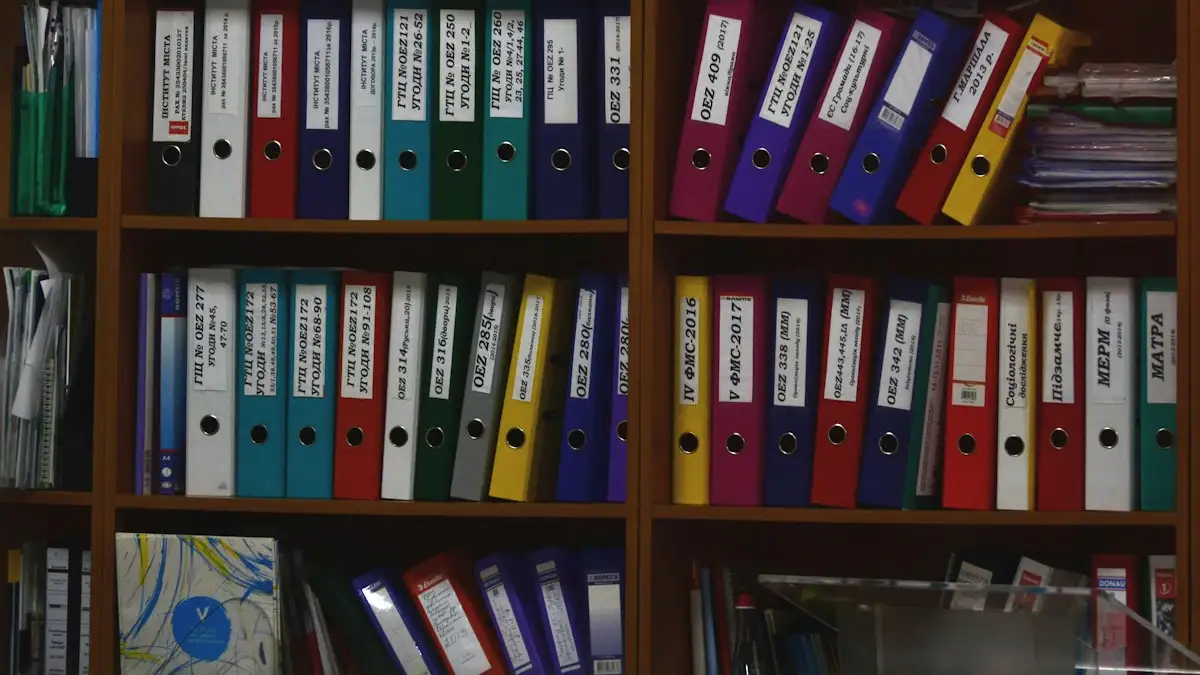
A single plant can keep its ISO documents in a binder and a shared folder and still pass an audit. A group with dozens of certified sites in several countries cannot. The same procedure exists in six versions, a site translates a group standard and never updates it, and the week before the audit someone asks which risk assessment template is the current one. Each of these is a document control problem, and certification auditors look for them.
This guide is for group and regional EHS directors, quality and compliance leads and the people who run integrated ISO 45001, ISO 14001 and ISO 9001 systems across many sites. It explains what clause 7.5 asks for, how to set up one document model for a whole group, and why 2026 and 2027 are years to get it right: all three standards are being revised. It is general information, not legal advice; your certification body applies the details.
Why document control breaks in a group
- Copies multiply. A group procedure is emailed to sites, saved locally, printed and laminated. When the group updates it, the copies stay as they were.
- Local edits, no record. A site adapts a template to its own process. That is often right, but nobody records what changed, who approved it, or which group version it came from.
- Translations drift. The English master moves to revision 4 while the Arabic or Bangla version still reflects revision 2.
- Records are kept, but cannot be found. Training records, inspection checklists and audit reports exist somewhere, on paper or in chat groups, but not where an auditor or a regional manager can retrieve them.
- No one owns the external documents. Laws, permits, customer codes of conduct and supplier safety data sheets change without anyone being told.
What clause 7.5 requires
Clause 7.5, "Documented information", appears in every ISO management system standard that follows the common high-level (now harmonized) structure, including ISO 45001, ISO 14001 and ISO 9001. It replaced the older terms "documents" and "records". Because the clause is shared, one document control process can serve an integrated system. In ISO 45001 it has three parts:
| Sub-clause | What it asks | What it means for a group |
|---|---|---|
| 7.5.1 General | The system includes the documented information the standard requires and the documented information the organization decides is necessary for the system to be effective | A group list of required documents and records, plus the local ones each site adds |
| 7.5.2 Creating and updating | Suitable identification and description (for example title, date, author, reference number), suitable format (language, software version, graphics) and media (paper, electronic), and review and approval for suitability and adequacy | One numbering scheme, one template and one approval rule for every site and language |
| 7.5.3 Control | Documented information is available and suitable for use where and when it is needed, and adequately protected from loss of confidentiality, improper use or loss of integrity. Control covers distribution, access, retrieval and use; storage and preservation, including legibility; control of changes, such as version control; and retention and disposition. Documented information of external origin is identified and controlled | The current version reaches the shop floor; old versions are withdrawn; records cannot be changed without a trace; retention periods are set |
Multi-site certification adds a structural point. IAF MD 1:2023 describes a multi-site organization as one covered by a single management system with an identified central function where processes are planned and controlled. Group-wide document control is one of the clearest ways to show a certification body that the system really is single.
Documents and records: maintain or retain
The standards use two verbs. Documented information that is maintained is a living document: it is reviewed and updated. Documented information that is retained is evidence of what happened: a record, which should not change. Typical examples:
| Maintain (documents) | Retain (records) |
|---|---|
| Scope of the management system (4.3) | Evidence of competence: training records (7.2) |
| OH&S policy (5.2) | Monitoring, measurement and evaluation results (9.1) |
| Objectives and plans to achieve them (6.2) | Internal audit programme and results (9.2) |
| Information needed to run operational controls (8.1) | Management review results (9.3) |
| Processes and plans for responding to emergencies (8.2) | Incidents, nonconformities and corrective actions (10.2) |
The exact list differs a little between ISO 45001, ISO 14001 and ISO 9001, so build one cross-reference for the integrated system. The control is different for each type: documents need review, approval and version control; records need protection against change, a retention period and a way to retrieve them. Most problems in groups come from treating both the same way.
A three-tier document model
A model that works for most groups has three tiers, each with a clear owner:
- Group documents. Policy, the management system manual or description, group standards (for example permit to work, contractor control, incident classification) and common templates. Owned by the central function; approved once; used everywhere.
- Country or regional documents. The legal register, translations, and procedures that must reflect national law. Owned by the country lead; each one references the group document it is based on and its revision.
- Site documents. Site risk assessments, emergency plans, local work instructions and permits. Owned by the site; built on group templates so that they can be compared and audited across sites.
Two rules keep the model honest. First, a lower tier may add detail but not weaken a higher tier. Second, every document shows its tier, owner, revision and the clause or clauses it supports. The second rule turns audit preparation into a search: an auditor asking for evidence of clause 8.2 gets every site's emergency plan, drill records and review dates in one list. Our guide to the multi-site internal audit programme shows how auditors use that evidence.
Change control while the standards change
Groups certified to several standards face an unusual amount of change in 2026 and 2027:
| Standard | Status | Transition |
|---|---|---|
| ISO 9001 | ISO 9001:2026 published on 16 September 2026; ISO 9001:2015 withdrawn | SQS gives 30 September 2029 as the final deadline, when 2015 certificates lose validity |
| ISO 14001 | ISO 14001:2026 published in April 2026; changes include a new clause 6.3 on planning changes | About three years; DQS expects the end of May 2029, pending the final IAF rules |
| ISO 45001 | Revision at Draft International Standard stage (consultation 16 June to 8 September 2026); harmonized structure retained | Publication expected no earlier than April 2027 (SQS); transitions are usually three years |
Each new edition means updated procedures, templates, cross-references and training, at every site. Handle it as a controlled change, not a rewrite:
- Map before you edit. List every group document that cites a clause number or requirement that changes, and every site document built on it.
- Change once, at the top. Update the group document, approve it, and let the change flow to the country and site documents that reference it, with a due date for each.
- Record the reason. Each revision states what changed and why ("aligned to ISO 9001:2026 clause 6.3"), so an auditor can follow the trail.
- Withdraw the old version. Old revisions are archived and marked obsolete, not deleted, so records made under them still make sense.
- Train after approval. Link the revision to awareness or training records for the people who use it.
For ISO 45001, wait for the published standard before renumbering anything: the draft can still change. Our guide to rolling out an EHS system across many sites covers the change management side.
Documents of external origin
Clause 7.5.3 also covers external documents the organization needs: laws and regulations, permits and licences, customer and brand codes of conduct, standards, and supplier documents such as safety data sheets. In a group, each one needs an owner, a source, a date checked and the sites it applies to. The legal register is the most important of these. If national law changes, the country owner updates the register and opens actions for the affected sites; the change is visible at group level.
Access, languages and the shop floor
- Decide who can view and who can change. Most people need to read the current version; few should be able to edit it. Scope access to each user's part of the organization, as described in our guide to role-based access in EHS software.
- Point of use. "Available where and when needed" means the work instruction is on the line, on a phone or a printed controlled copy, not only in an office folder.
- One master, controlled translations. The translation carries the same revision number as the master and is updated as part of the same change.
- Protect records. A record that is corrected should keep its history: who changed what, when and why.
- Set retention. Define how long each record type is kept, in line with legal requirements in each country, and how it is disposed of.
Measuring document control
A few simple measures show whether document control works across the group:
- Documents past their review date, by country and site.
- Open changes: group revisions not yet applied at site level, and their age.
- Audit findings related to documents or records, as a share of all findings.
- Required records missing for the period (for example drills, inspections, training).
- Time to find the evidence for a given clause at a given site.
12-point checklist
- A group list of required documents and records for ISO 45001, ISO 14001 and ISO 9001, cross-referenced by clause.
- Three tiers (group, country, site) with a named owner for every document.
- One numbering scheme and one set of templates for all sites and languages.
- A defined review and approval rule, restricted to chosen roles.
- Every document shows its tier, owner, revision and the clauses it supports.
- Version control: one current version; obsolete versions archived and marked.
- Translations carry the master's revision and change with it.
- Records are protected from change; corrections keep their history.
- Retention periods are set per record type and per country.
- External documents, including the legal register, have owners and check dates.
- A transition plan for ISO 9001:2026, ISO 14001:2026 and the coming ISO 45001 edition.
- Document KPIs reviewed in the management review.
Frequently asked questions
Does ISO 45001 require a document control procedure?
ISO 45001 does not use the word procedure, but clause 7.5.3 requires documented information to be controlled: available where needed, protected, version-controlled, stored, retained and disposed of. Most organizations describe how they do this in a short documented process so that every site works the same way.
Can one document control process cover ISO 45001, ISO 14001 and ISO 9001?
Yes. Clause 7.5 is part of the common structure shared by these standards, so the same rules for identification, approval, version control and retention can serve an integrated management system. Keep a cross-reference of which documents and records each standard requires.
Do sites need their own procedures in a multi-site group?
Sites need site-specific documents such as risk assessments, emergency plans and work instructions, but they should be built on group templates and refer to group standards. That keeps the system single, which multi-site certification under IAF MD 1:2023 expects, and makes sites comparable in audits.
What should we do about the new ISO 9001 and ISO 14001 editions?
Treat them as controlled changes: map the documents affected, update the group documents first, let the changes flow to sites with due dates, and agree the transition audit timing with your certification body. For ISO 45001, wait until the new edition is published before renumbering documents.
How AccelSafety helps
AccelSafety, our enterprise HSE software, keeps ISO documents and the records that prove them in one place. Every site sits in one organizational hierarchy, from group to region, country, cluster and site, and access is scoped to each user's part of it and enforced on the server. Documents and records are filed under the ISO 45001 clause they prove, from 4 Context to 10 Improvement, and every document shows who changed what and when. Approvals, reviews and configuration are restricted to the roles you choose, corrections need a reason and admin approval, and the full audit trail stays with each record. More than 50 certification tools cover ISO 45001, 14001, 9001, 50001, 22000 and 22301, with shared requirements handled once. Daily work, such as incidents, inspections, training and actions, is recorded from phones with photos, so the evidence stays current without a document hunt before the audit.
Accel installs it, migrates your last two years of records within 7 days, and looks after hosting, updates, training and support, with unlimited users. Book a demo to see the document and evidence structure for your sites.
General information, not legal advice. Check the current text of ISO 45001, ISO 14001, ISO 9001 and IAF MD 1, and your certification body's transition rules.
Sources
- ISO: ISO 45001 Occupational health and safety management systems
- Presencis: ISO 45001 clause 7.5 documented information (summary of requirements)
- ISO 9001 Checklist: ISO 45001 7.5 documented information
- DQS: What is documented information?
- Auditor Training Online: Management systems, what needs to be documented (maintain and retain)
- SCC: IAF MD 1:2023, audit and certification of a management system operated by a multi-site organization
- ISO: ISO 9001:2026 Quality management systems, requirements
- SQS: Revision of ISO 9001:2026 (transition dates)
- DQS: ISO 14001:2026 transition guide
- SQS: Revision of ISO 45001 (expected 2027)